Attract the right jobs
Emergency repairs, full replacements and commercial flat roofing are different businesses. Separate pages let the firm say what it wants more of.
Homeowners search by problem and place, often in a hurry, then check reviews and request a survey.
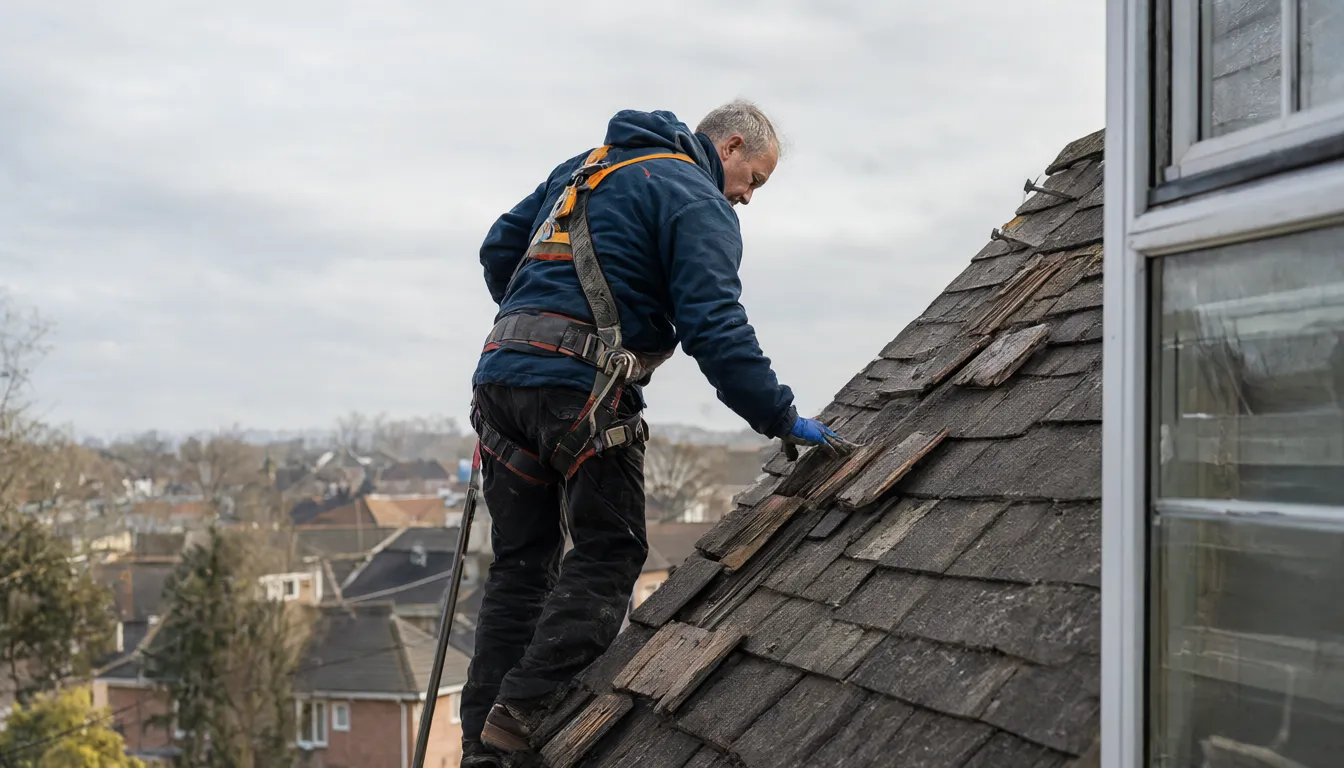
Roofing enquiries are urgent, visual and trust-heavy. A leak, a storm-damaged ridge or a full replacement starts with a phone or a photo, then a survey. Homeowners want to know whether the firm covers their area, what a repair typically costs and whether the work will be done by employees or subcontracted.
Search visibility helps most when it is specific. Queries that combine 'roof repair', 'flat roof replacement' or 'emergency roofer' with a town name attract different jobs. A firm that answers those searches clearly, with real project photos and honest boundaries, spends less time explaining what it does.
The full programme is scoped after an audit — not before.
Emergency repairs, full replacements and commercial flat roofing are different businesses. Separate pages let the firm say what it wants more of.
Before-and-after photos, material specifications and warranty details answer the questions that determine whether a homeowner requests a survey.
Clear service-area pages and boundaries reduce enquiries from outside the working radius, which protects margin and response time.
The same client may see a search result, a map pin and an AI summary in the same afternoon. Inconsistency between them is more damaging than a missing page.
People search with the problem, the place and the constraint. For roofers, the useful queries combine a job with a location and a specific requirement. The page has to answer that combination in plain language before it asks for a call.
A map result, a phone number and a handful of reviews often decide whether the website is opened at all. Profile accuracy, office pages and the site's contact details must agree — especially for roofers with more than one location.
Assistants gather facts and quote sources. Consistent service definitions, clear locations and verifiable proof give them something accurate to use. Vague positioning becomes a vague answer, and the firm disappears from the shortlist.
Each service is weighted for roofers. The order below reflects the usual priority, not a fixed sequence.
Fast image-heavy galleries, click-to-call, local business schema and clean service and area URLs.
View serviceGoogle Business Profile, service-area settings and town pages for the areas the firm actually covers, with review flow.
View serviceProblem-led pages for leaks, storm damage, flat roofs, tiles and slates, with honest cost ranges and material guidance.
View serviceLocal press after storms or community projects, supplier and trade-body citations, and relevant home-improvement publications.
View serviceA quote-first site with strong project photography, clear coverage areas and a short survey request form.
View serviceA local visibility, speed and lead-quality audit with a prioritised plan for the next 90 days.
View serviceWe list the jobs the firm wants, the areas it genuinely covers and the enquiries it wants to stop receiving.
Business profile, reviews, project photos and warranties are checked before content expansion.
Each page answers a specific roofing problem with real project evidence and a clear survey route.
Calls and form fills are reviewed by job type and area, so the firm can see which pages produce work.
These are research themes, not a promise of rankings. Volume, competition and commercial intent are checked before anything is prioritised.
We build town pages only when there is genuine local research behind them. The architectural-firm network is live now; the other industries are hub-only while those pages are researched.
The architectural-firm network covers 32 UK towns and shows how we research a local market before publishing. It is the right reference point for how a future town page for roofers will be built.
Explore the architectural-firm networkStraight answers, including the limits of what any agency can promise.
Only if you can genuinely deliver it. An emergency page that rings out or quotes a long lead time damages trust. If you offer it, make the hours and response window clear.
As many as you can serve well. Service-area pages should reflect real travel time and completed work, not a nationwide map with no evidence.
They help conversion and can support image search, but only if they are genuine, well-labelled and fast-loading. Stock photos of other people's roofs undermine trust.
By being clearer and more local. Real reviews, named team members, genuine project photos and transparent coverage beat a generic lead broker for most homeowners.
Yes. Commercial enquiries need a different page and proof set — specifications, accreditations, health and safety and framework experience.
No. We improve visibility and enquiry quality, but weather, seasonality and capacity all affect demand.
Tell us what you want to grow and what is currently limiting enquiries. We will tell you if we are the right fit, and what we would do first.