The brief comes before the brand
The most valuable search terms in Birmingham describe a project, not a profession. Once a page names Jewellery Quarter or industrial conversions, it can earn impressions from clients who already know what they need.
Birmingham concentrates Victorian industrial heritage, Jewellery Quarter workshops and a wave of city-centre regeneration into a relatively small search market. Clients arrive with industrial conversions, residential towers, public-realm projects and heritage refurbishment in mind, and they are usually regional developers, manufacturing businesses and private homeowners. The practice that wins is the one whose site answers the brief in the client's own language.
Local search is decided by relevance and proof, not by the size of the practice. A small Birmingham studio with clear project pages can out-rank a larger firm whose site is one undifferentiated portfolio.
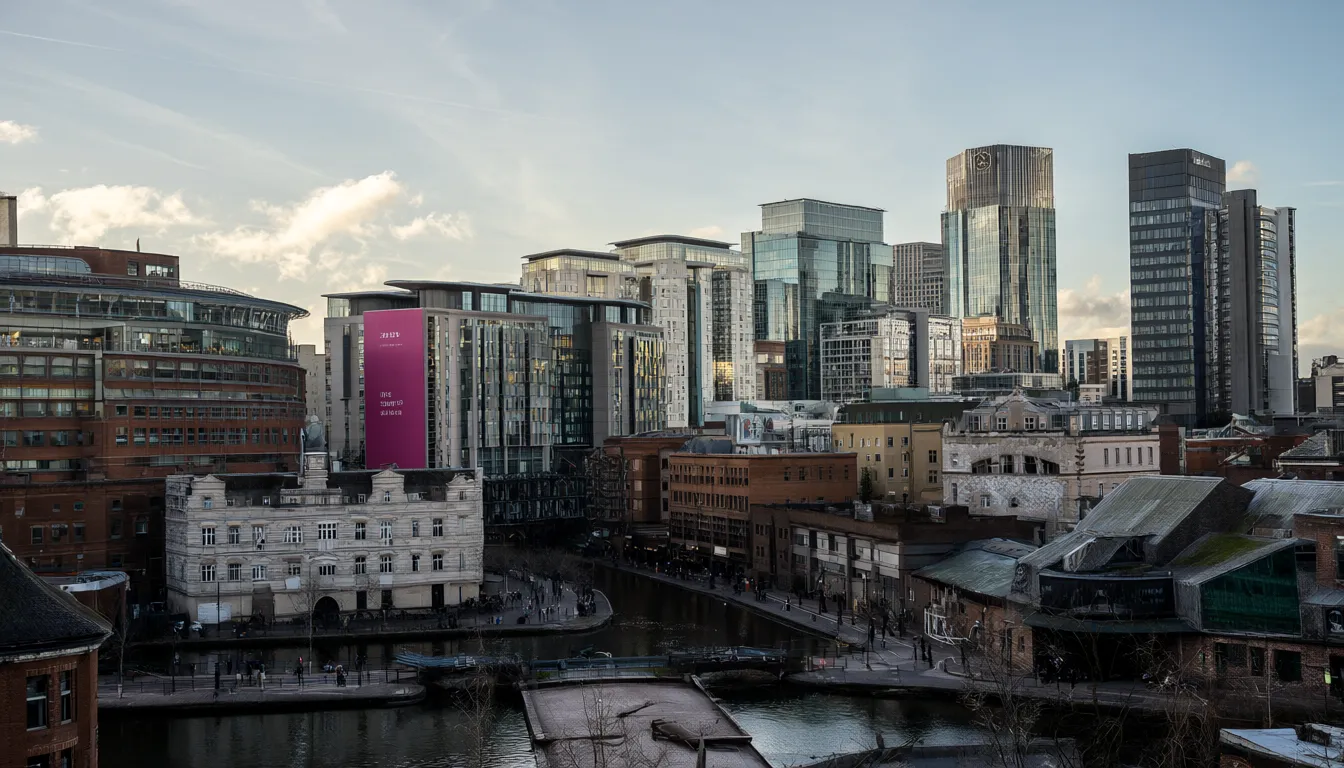
Most Birmingham practices lose visibility for unglamorous reasons: project pages are filtered behind JavaScript, location copy is generic, and the Google Business Profile disagrees with the website. Fixing those basics is the first commercial win.
The most valuable search terms in Birmingham describe a project, not a profession. Once a page names Jewellery Quarter or industrial conversions, it can earn impressions from clients who already know what they need.
Location pages should reflect the areas where the practice has genuine project history. In Birmingham, that usually means a handful of districts around Jewellery Quarter and Digbeth regeneration, not every postcode in the travel-to-work area.
Referrals remain the backbone of most Birmingham practices, but the referred client still searches the firm's name before calling. A site that ranks for its own name and for industrial conversions reinforces the introduction instead of undermining it.
The Birmingham market is shaped by Victorian industrial heritage, Jewellery Quarter workshops and a wave of city-centre regeneration. The briefs that follow are industrial conversions, residential towers, public-realm projects and heritage refurbishment, commissioned by regional developers, manufacturing businesses and private homeowners. Local knowledge is not a differentiator on its own, but the ability to explain it clearly is.
Library of Birmingham, Birmingham Town Hall, Selfridges Building and Bournville are useful context, not a substitute for project evidence. In Birmingham, Library of Birmingham can anchor a page, but it needs nearby project evidence to be useful.
The local opportunity is rarely a single high-volume term. It is a cluster of specific briefs across the West Midlands, each with modest demand and high commercial intent. Curzon Street and Digbeth regeneration have created a cluster of scheme-name searches; practices should map those names to project pages rather than relying on a generic city page.
Six services, weighted for an architectural practice in the West Midlands. Each includes a Birmingham-specific action, so the programme is not a generic template.
In Birmingham, we align the Google Business Profile, citations and location pages so the map pin and the website tell the same story; around Jewellery Quarter that means matching the districts where you actually work.
Our Birmingham audit checks crawlability, indexation, Core Web Vitals and structured data on the templates behind Library of Birmingham and the rest of the portfolio.
We build Birmingham project pages for industrial conversions and residential towers, with planning explainers and case studies reviewed by your team.
We earn citations for Birmingham practices from West Midlands business and property media, professional bodies and organisations connected to Digbeth regeneration, and we report what was earned.
We rebuild Birmingham portfolio templates for speed, mobile clarity and a visible enquiry route, keeping the path short for regional developers.
In Birmingham, we report rankings alongside enquiry quality by project type and district, with a written view of what Jewellery Quarter searches are actually producing.
Six stages, run in order. The first two are specific to Birmingham; the rest are disciplined execution.
We inventory the existing pages, check what is indexed and compare the practice against the firms winning Jewellery Quarter and Digbeth regeneration searches.
We agree which industrial conversions briefs to prioritise across Birmingham, then sequence the work by commercial value and effort.
We fix crawl, speed and schema issues on the templates carrying the Library of Birmingham project pages and the rest of the portfolio.
We publish Birmingham project and planning pages, then earn citations from West Midlands business and property media and bodies connected to Curzon Street / HS2.
We review the route from a Birmingham project page to enquiry and shorten it for regional developers.
We review performance monthly and expand only where Birmingham searches show demand, starting with Jewellery Quarter.
These are the patterns we research and prioritise. Volume is never the only test; commercial intent and the practice's fit matter more.
Pages built around industrial conversions attract clients who already understand the brief; in Birmingham, that means fewer poor-fit calls about residential towers.
Consistent details and genuine district pages make the firm easier to find around Jewellery Quarter and Digbeth regeneration, including the parts of the West Midlands where you actually work.
Case studies explain the brief, the constraint and the outcome; for Birmingham clients, the route through conservation-area planning permission, listed-building consent and major-scheme pre-application work is often as important as the finished photograph.
We connect rankings to enquiries by project type and district, so a Birmingham partner can see what Jewellery Quarter visibility is actually worth.
Answers written for practices across the West Midlands, including the limits of what an agency can promise.
We usually start industrial conversions engagements in Birmingham with a fixed audit and roadmap, then move to a monthly programme. The fee depends on how many of the industrial conversions, residential towers, public-realm projects and heritage refurbishment briefs you want to cover, the state of the site and how much content needs writing. We quote a Birmingham scope before starting and do not tie the fee to a ranking position.
Technical fixes in Birmingham can show movement within weeks; new project pages usually need two to four months to settle around Jewellery Quarter and Digbeth regeneration, and competitive terms take longer. The Birmingham timeline depends on how quickly your team reviews industrial conversions content and how consistent the Google Business Profile is.
No. We work across the UK, and Birmingham is one of the markets we have researched in detail around Coventry, Nottingham, Derby. If your projects also sit in Coventry, Nottingham, Derby, we can build those pages too, provided there is project evidence rather than a duplicated location template.
We research the context before writing: conservation-area planning permission, listed-building consent and major-scheme pre-application work. We rely on your team for project-specific confirmation around Library of Birmingham, because positions change and we do not invent approvals. The result is Birmingham content for industrial conversions that sounds local without claiming consents the practice does not have.
Yes. Each staffed Birmingham office needs its own page, Google Business Profile and contact details, while shared content about industrial conversions stays at the main site level. Across the West Midlands, we check that the office pages do not compete for the same Jewellery Quarter searches.
Start with the pages closest to revenue: the industrial conversions briefs you want, the Jewellery Quarter districts where you have work, and the mobile enquiry route. Then fix what stops the Birmingham Town Hall pages from being indexed. In Birmingham, a clear industrial conversions page usually beats another generic "about us" rewrite.
We also build local pages for practices working across the West Midlands and other UK markets.
Tell us about the briefs you want and the districts you work in. We will reply with a view on fit, priority and the first useful move — no ranking promises.